Sailing school — IYT Bareboat Skipper and VHF courses

IYT Bareboat Skipper · IYT VHF Radio Operator

School

Dates on request

About the course

Course goal

Obtain the international “IYT Bareboat Skipper” and “IYT VHF Radio Operator” licences. With these licences you can charter (hire) a sailing yacht, motorboat or catamaran outside Russia.

Students per course
up to 5
Practice
7 days
Exams
2
Night navigation
Yes
Viktor Fetisov
Course author

Viktor Fetisov

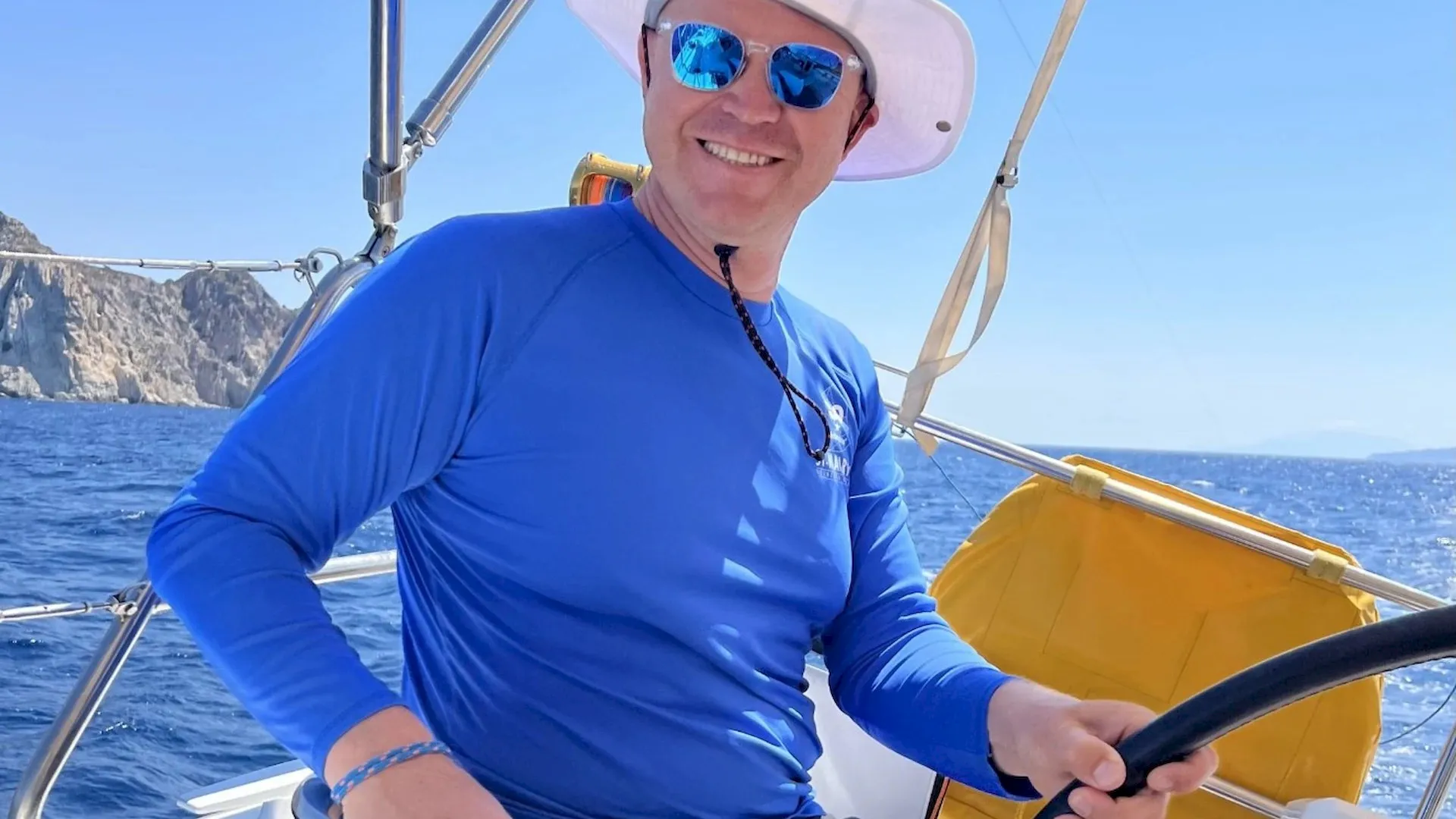
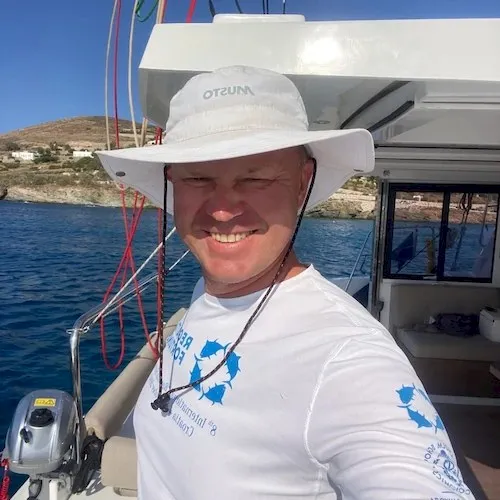
The course is taught by Viktor Fetisov, Yacht Master Offshore with 40,000 miles of experience. He has been training future sailors for 10 years and can explain complex things simply and clearly. He has taken part in and won prizes at a huge number of sailing regattas and organises his own sailing regatta, “Fortuna”. He has an extensive knowledge of the specifics of different sailing areas, from the Caribbean Sea to the Indian Ocean, as well as the nuances of working with various charter companies.

How the training works

The course consists of 2 stages

01

Studying the theory

There are several options:

  • studying the theory on your own from books;
  • taking an online course, where our instructor answers any questions that come up after you have studied the material yourself. This format saves time while still letting you work through the problems that will be on the exam. You can purchase this online course from us;
  • attending in-person classes at an IYT-certified school where you live.

Ideally, while studying the theory, you should join a regatta as a crew member. This will let you learn the structure of the boat and sails, get some practice and then focus on handling the boat and crew during the skipper course.

02

Practical training and exams

Practical course: its goal is to gain hands-on skills in handling the boat and the crew. We run this practice over 7 days on a cruising sailing yacht (or a catamaran for the catamaran course). The course covers all elements of boat handling and mooring, as well as night navigation. At the end of the course, two theory exams with problem-solving are taken. The maximum number of students per course is 5.

Please check upcoming practical session dates with our manager.

22 topics

What the course includes

10
topics — in practice
12
topics — self-study
    • Parts of the vessel and rigging.
    • General nautical terminology.
    • Charter yacht equipment,
    • Engine basics, minor repairs
    • Batteries
    • Pumps, seacocks, toilets.
    • Fuses and switches
    • Safety equipment, where it is stored and how to use it.
    • Fire safety and firefighting.
    • Risk of flooding
    • Use of personal safety equipment, harnesses and life jackets.
    • Sending distress signals on VHF.
    • Organising rescue operations, including helicopter assistance.
    • Running aground
    • Injury to a crew member
    • Knots and their uses: figure-of-eight, bowline, clove hitch, reef knot, sheet bend, double sheet bend, round turn and two half hitches, fisherman’s bend.
    • Cleating a line,
    • using winches,
    • working the sheets,
    • tying on fenders
    • Checking the vessel is in good order.
    • Checking the inventory.
    • Preparing a passage plan for a short passage.
    • Taking the weather into account when planning a short passage.
    • Logbook
    • Yacht documents
    • Crew roles
    • Practising approaching a buoy.
    • Practising stern-to mooring
    • Practising coming alongside
    • Picking up a mooring buoy
    • Anchoring. Factors to consider when anchoring.
    • Mooring and departing from a lazy line mooring
    • Mooring in different wind directions.
    • Hoisting and lowering sails
    • Heading up,
    • Bearing away,
    • Tacking (tack),
    • Gybing (jibe),
    • Sail trim for different wind directions,
    • Reefing,
    • Exercises for understanding wind direction,
    • True and apparent wind
    • Trimming the mainsail and jib.
    • Crew action sequence,
    • Practising the MOB manoeuvre under engine.
    • Specifics of sailing and motoring at night.
    • Lights, lighthouses, other vessels.
    • Rules for handling a vessel and a sailing yacht.
    • General rules (all other rules).
    • Latitude and longitude.
    • Knowledge of standard navigation terms.
    • Speed.
    • Distance in miles.
    • Chart symbols and abbreviations, indicating direction and distance.
    • Using nautical publications.
    • Chart corrections.
    • Parallel rule, dividers, how to use plotting instruments.
    • Variation. Deviation.
    • Factors affecting compass deviation.
    • Hand-bearing compass.
    • Calculating position from course, distance and leeway.
    • Plotting position.
    • Other methods and sources of position fixing.
    • Accuracy of different position-fixing methods.
    • GPS.
    • Lighthouses and buoys, light characteristics.
    • Sources of weather forecasts.
    • Terms used in marine forecasts, including the Beaufort scale and its relevance to small craft.
    • Basic concepts of depressions, anticyclones and fronts.
    • Precautions and limitations when sailing in fog.
    • Using transits, clearing lines and sectors.
    • IALA buoyage system.
    • Plotting courses relative to the wind for sailing vessels.
    • Pilotage plans, marina approach plans.
    • Operating principle,
    • Basic rules of use,
    • Range
    • Channels
    • Communication with shore services
    • Sending a distress signal
    • Basic settings.
    • Environmental protection rules in marinas and liability for breaking them
    • Nautical etiquette
    • Maritime traditions

Contact us

Any
questions?

Our team of experts is available 24/7 to help you choose a yacht and a route and to answer anything you’d like to know.